Тофуку-дзі
Кіото· Tofuku-ji
Photo Seasons
345
678
91011
1212
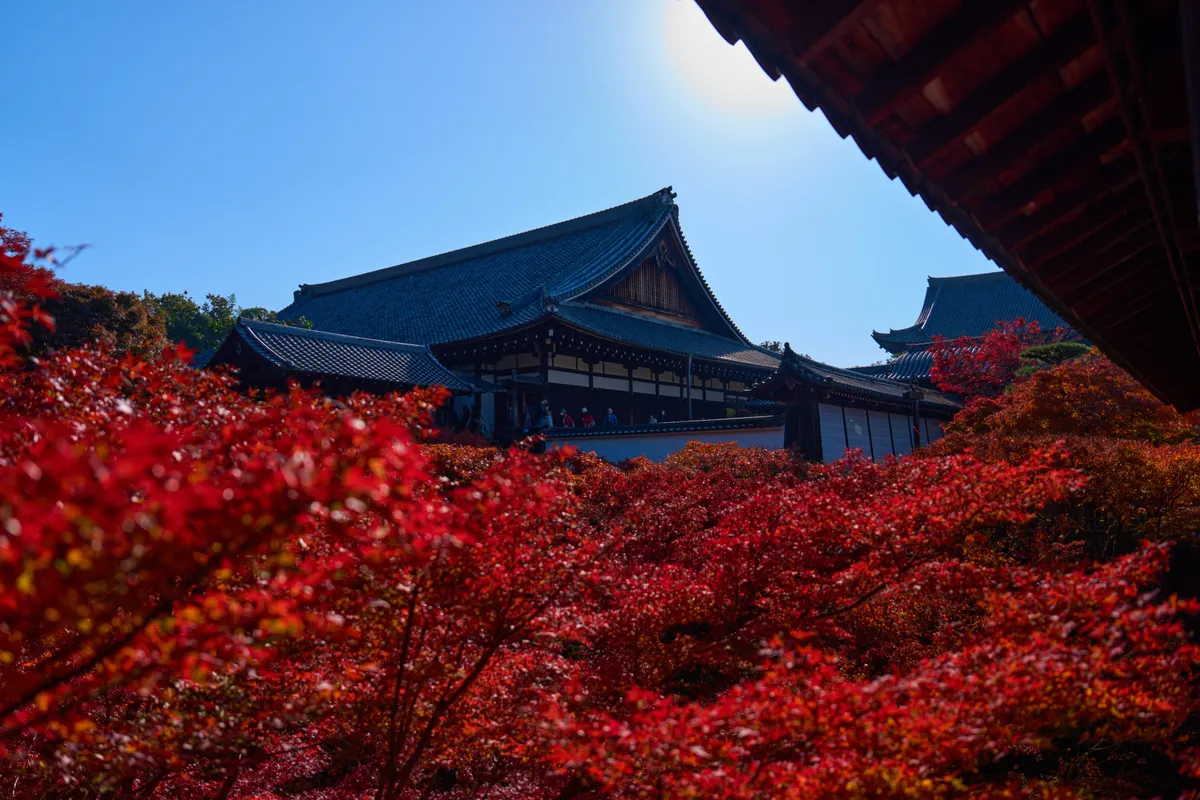
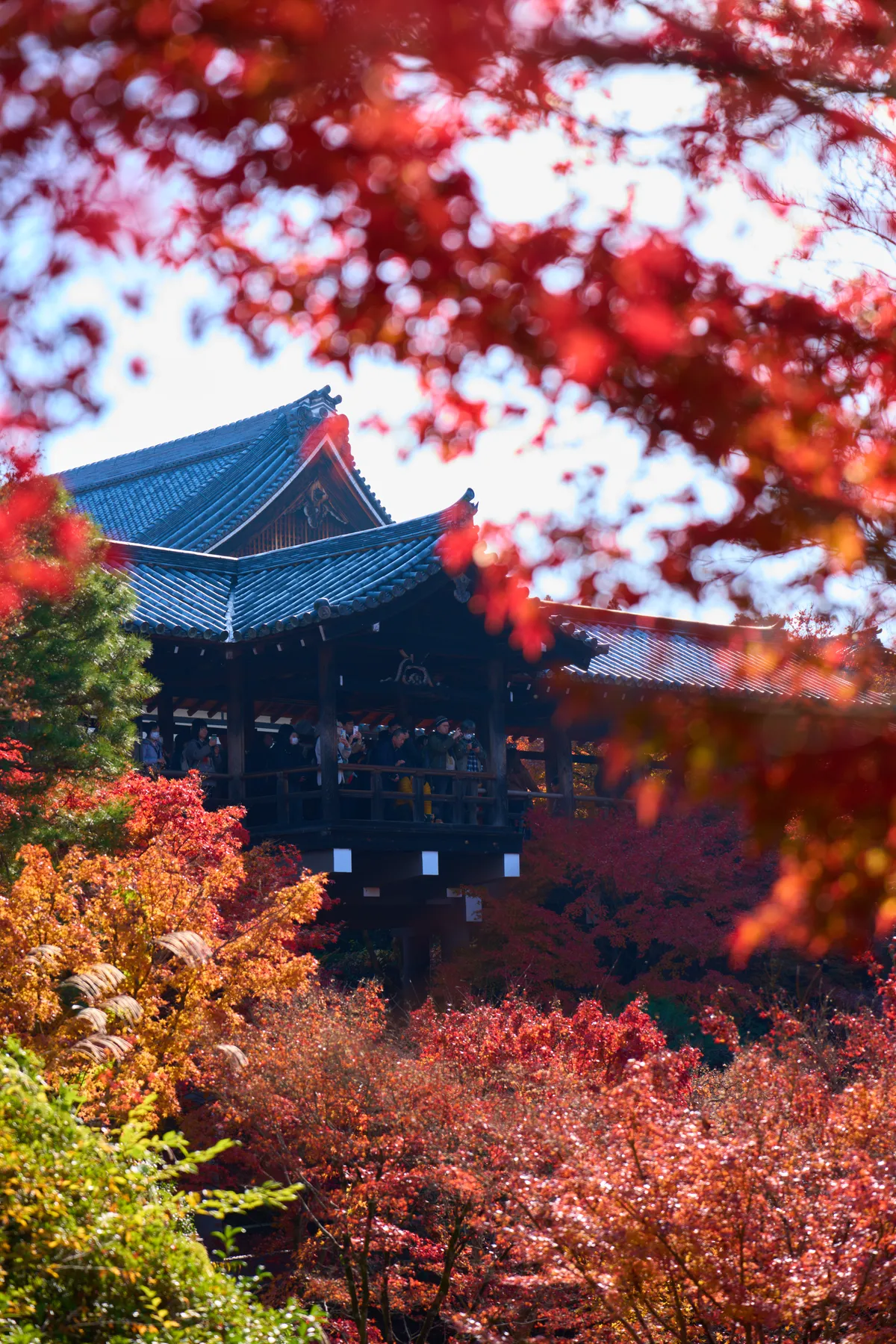
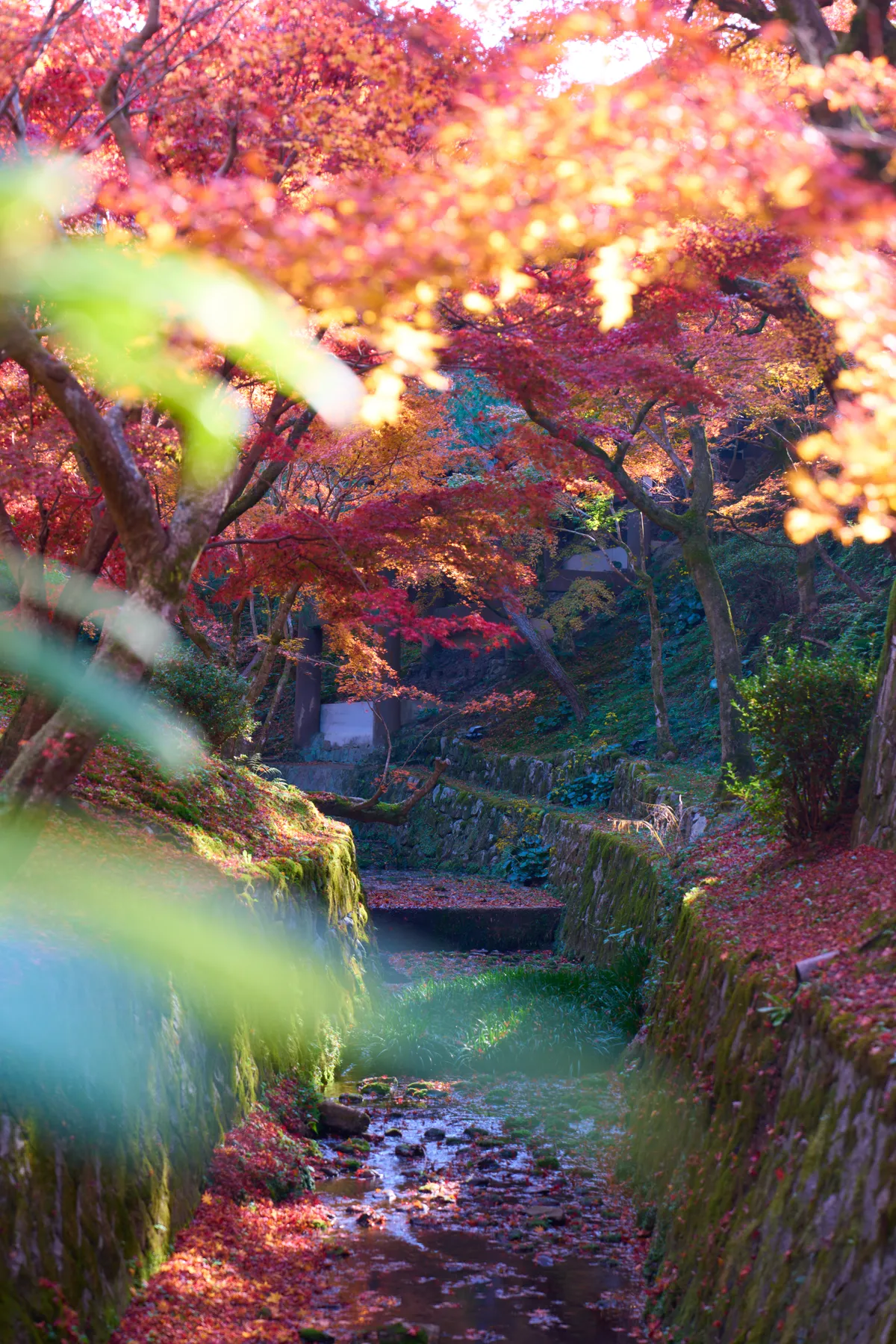
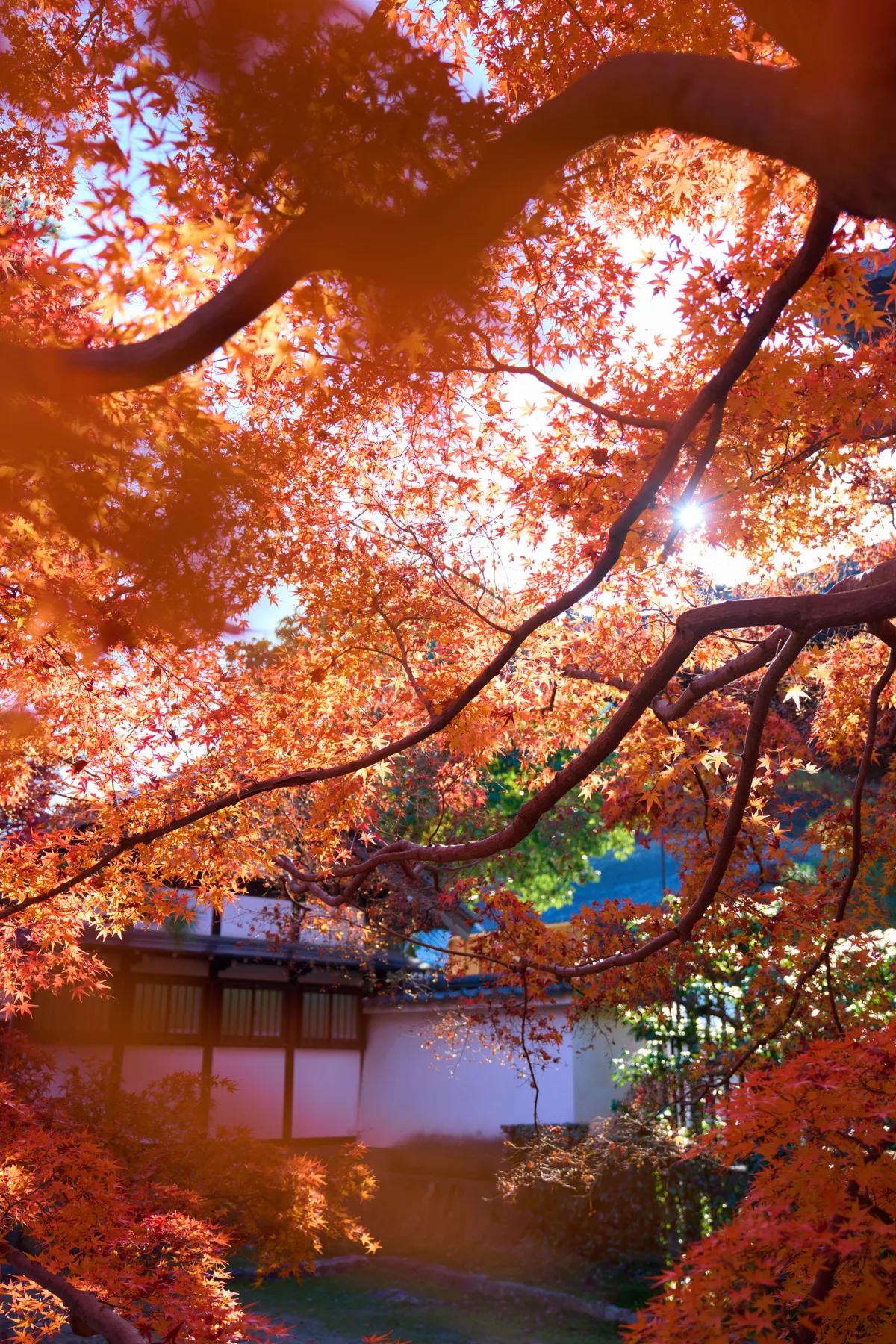
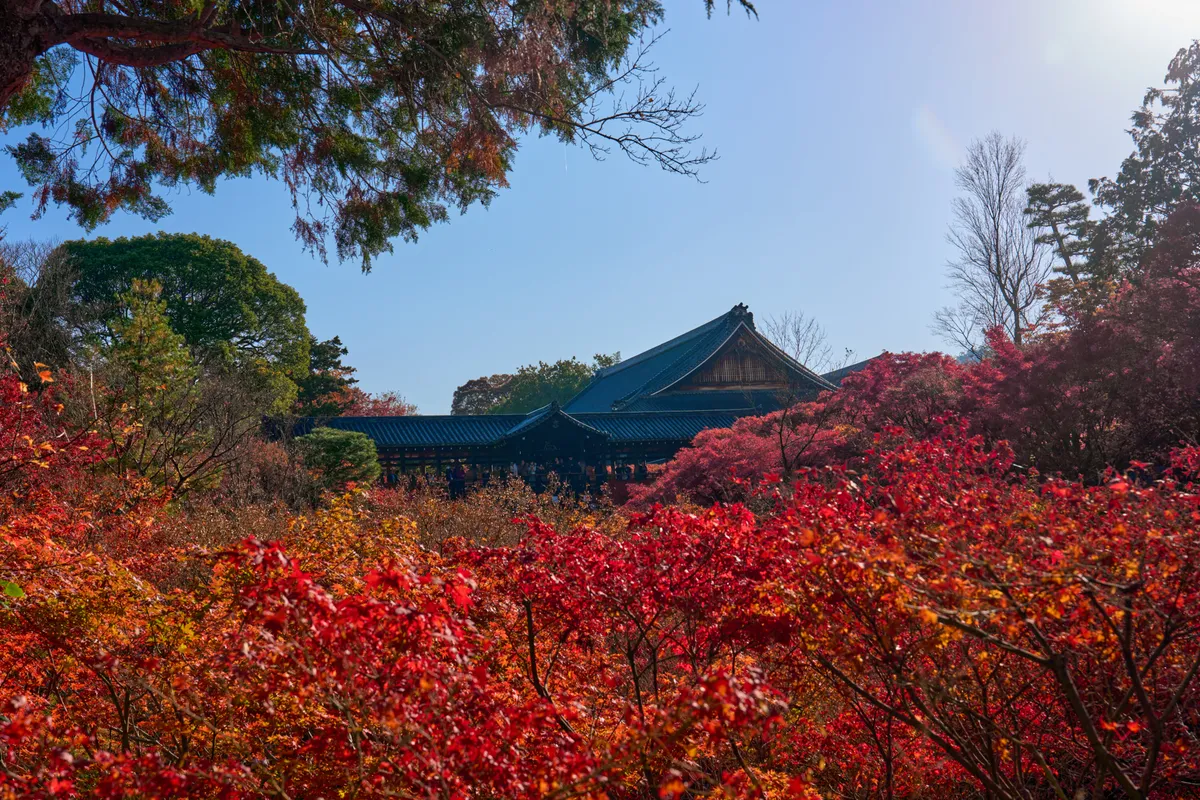
Tofuku-ji is the head temple of the Tofuku-ji school of Rinzai Zen Buddhism in Kyoto's Higashiyama Ward. Founded in 1236 by Kujo Michiie — who took one character each from Nara's Todai-ji and Kofuku-ji to name it — it is one of Kyoto's largest Zen temples. Its Sanmon Gate (a National Treasure rebuilt in 1425) is the oldest and largest surviving Zen temple gate. With 25 sub-temples and a vast precinct, it is most famous for the «Tsuten-kyo Bridge» overlooking the Sengyokukan ravine, a sea of about 2,000 maple trees that form Japan's premier autumn foliage view. The hojo (abbot's quarters) garden, designed by Mirei Shigemori, is among the great masterpieces of modern Japanese garden art.
Highlights
- Tsuten-kyo Bridge — a 100 m covered walkway across the Sengyokukan ravine to the Founder's Hall, framing a sea of crimson maples
- Sanmon Gate (National Treasure) — rebuilt in 1425, the oldest and largest surviving Zen temple gate at 22 m tall; the upper level opens only during special exhibitions
- Hojo Garden by Mirei Shigemori — four gardens (north, south, west, east) blending modern and classical motifs, a masterpiece of modern Japanese garden design
- Main Hall and Butsuden — Showa-era reconstruction (1934) with Domoto Insho's overwhelming «Sōryū-zu» (Azure Dragon) ceiling painting
- Sub-temples — 25 in total; Komyo-in's «Hashin no Niwa,» Shorin-ji, and Funda-in are insider autumn foliage destinations
Quick Answers
What is Tofuku-ji?
A Rinzai Zen head temple founded in 1236 in Kyoto's Higashiyama Ward. One of Kyoto's largest Zen temples, with a National Treasure Sanmon Gate, the famous «sea of maples» from Tsuten-kyo Bridge, the Mirei Shigemori-designed hojo garden, and 25 sub-temples.
When are autumn colors at their best?
Peak is typically late November to early December. Photography from Tsuten-kyo is restricted during peak weeks to ease congestion. Early morning right after the 8:30 opening offers thin crowds. Track sudden cold snaps that trigger color.
What are admission fees and time required?
About ¥400 for Tsuten-kyo and the Founder's Hall, ¥400 for the hojo garden, ~¥1,000 for the combined ticket. Including sub-temples, allow 2–3 hours. During peak weeks, traffic and entry restrictions apply — check in advance.
How do I get there?
From JR Nara Line or Keihan «Tofuku-ji» Station, 10-min walk. From Kyoto Station, JR Nara Line is one stop, 3 min, ¥150 — exceptionally convenient. During autumn (November), JR runs additional rapid services and shuttle buses to the temple. You can also walk to Sennyu-ji or Sanjusangen-do afterwards.
Current Tsuten-kyo restrictions?
Recently, during peak weeks (~Nov 20 to early Dec), photography on Tsuten-kyo Bridge is forbidden — no stopping, no rail-side photography, no selfie sticks. Walk through only. Shoot from the free Garyukyo Bridge before, or look back at Tsuten-kyo from the Founder's Hall side instead.
Hidden foliage spots besides Tsuten-kyo?
①Komyo-in's «Hashin no Niwa» (free entry, wave-pattern moss garden, beautiful even in summer green) ②Ryogin-an (National Treasure abbot's quarters, special openings only) ③Funda-in (crane-and-tortoise garden attributed to Sesshu) ④Shorin-ji (special opening of Bishamonten, less crowded). Visit sub-temples to escape the main-hall crush.
Practical Information
- Access
- 10-min walk from Tofuku-ji Station (JR Nara Line / Keihan).
- Parking
- Free in normal times; closed during autumn — use public transit.
- Admission
- Tsutenkyo bridge + abbot's hall ¥500. Autumn season only.
- Duration
- 1-1.5 hr.
- Best Time
- Nov 20 - Dec 5, right at 8:30 opening.